
Boundaries Defined With the Right Material
Fence Installation in Ooltewah for residential properties with uneven yards, privacy requirements, pet containment needs, or undefined property lines
An undefined yard boundary creates more practical problems than most homeowners anticipate—neighbor disputes, pet escapes, and a lack of visual separation from adjacent properties all stem from the same gap. Ooltewah Decking Company addresses these conditions through residential fence installation, working with homeowners to select the right fence style, height, and material for how the yard is actually used. The service covers new fence construction for properties that have no existing fence as well as replacement installations where a prior fence no longer meets the homeowner's needs.
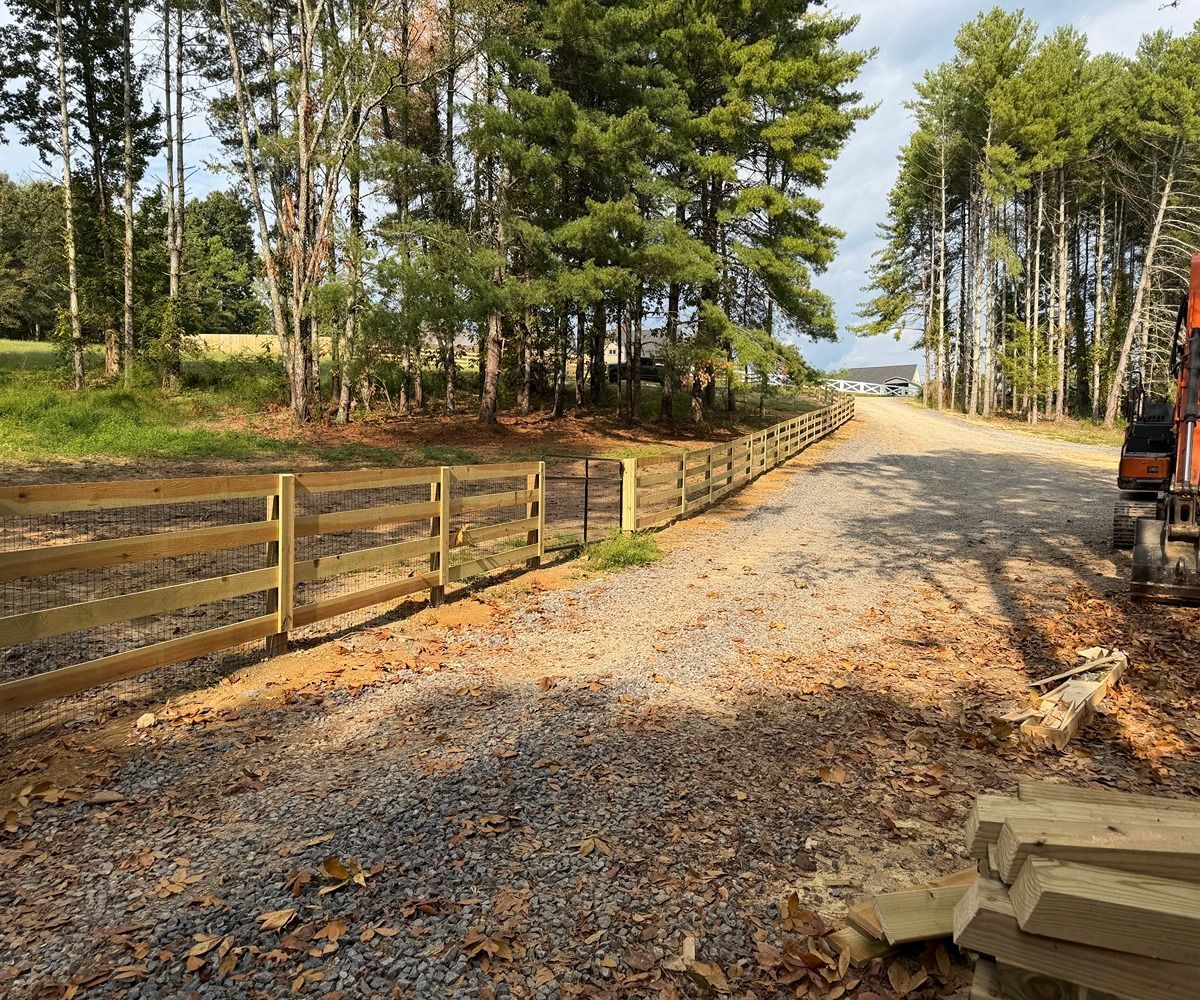
Fence style and height decisions depend on the goal. Privacy fencing with tightly spaced boards or solid panels reduces sightlines from the street and neighboring properties, while open styles like split rail or picket designs define boundaries without blocking views. Material choices affect both appearance and maintenance—wood fencing requires periodic sealing or painting in the Ooltewah area's humid summers, while vinyl or metal options carry different long-term care profiles. Gate placement and swing direction need to be planned early in the design phase because post placement and panel layout flow from that decision outward. Yards with significant slope present an additional variable: panels can follow the grade with a stepped installation or be racked to maintain consistent height across uneven terrain, and each approach produces a visually different result.
Discuss your fencing goals and property layout to receive an installation estimate based on your specific site conditions.
How Fence Installation Addresses Property-Specific Conditions
Before any posts are set, confirming the actual property line location is a step that protects homeowners from installing a fence that encroaches on a neighbor's lot or sits inside their own boundary. Survey records, plat maps, or a formal survey provide that reference point. Many neighborhoods in the Ooltewah and Chattanooga area also have HOA guidelines or municipal regulations that specify allowable fence heights, materials, or setback distances from the street, so those requirements factor into the design before material is ordered.
Once the fence is in place, the yard takes on a clearly defined shape that was not there before—pets can move through the space without requiring supervision, sightlines from adjacent properties are interrupted where privacy panels are used, and the property's edge is visible and legible to anyone approaching. A properly installed gate swings on level hinges, latches securely, and doesn't require lifting or force to operate, which is a detail that separates a well-executed installation from one where the gate post was set without adequate depth or concrete anchoring.
Fence height, panel style, and gate count are variables that affect the overall scope significantly. Homeowners with dogs also need to consider the gap between the bottom rail and grade—on sloped terrain, that gap can vary considerably across the fence run, and addressing it requires either grading the soil, adding a bottom board, or stepping the panels at closer intervals. Ooltewah Decking Company works through these considerations during the estimate process so the finished fence functions as intended from the first day of use.
What Property Owners Usually Ask About Fencing
Homeowners starting a fence installation project typically have questions about property boundaries, material options, and how sloped or irregular yards are handled.
Why is confirming the property line important before installation begins?
Installing a fence even a few inches over the boundary line can require removal and relocation at the homeowner's expense. Using a recorded plat or survey to establish the line before post holes are dug prevents that outcome.
How are fence posts installed on sloped ground in the Ooltewah area?
On sloped terrain, posts are typically set vertically into the ground regardless of grade, and the panels are either stepped down the slope in sections or racked to follow the angle—the right approach depends on the fence style and how consistent you want the finished height to appear.
What fence heights are typically available for residential installation?
Common residential fence heights run from four feet to six feet, with taller options available in some configurations. Local regulations and HOA rules may cap height in certain zones or along street-facing property lines, so those requirements should be checked before finalizing a design.
How many gates should be included in a residential fence plan?
Gate placement is determined by how you actually use the yard—access points for lawn equipment, vehicle entry, or walkways from the house should each be considered. Planning gate locations before panel layout begins prevents the need to cut into finished sections later.
What maintenance does a wood fence require after installation?
Wood fencing in humid climates benefits from sealing or painting on a regular schedule to slow moisture absorption at the board faces and post bases. Posts are the most vulnerable point, particularly where they meet the soil line, and keeping that area clear of debris helps slow decay.
Ooltewah Decking Company approaches each fence installation by reviewing the property layout, discussing style and material options, and identifying site-specific conditions before work begins. Call (423) 802-9491 to schedule a conversation about your fencing goals and get an estimate based on your yard's actual dimensions and requirements.