
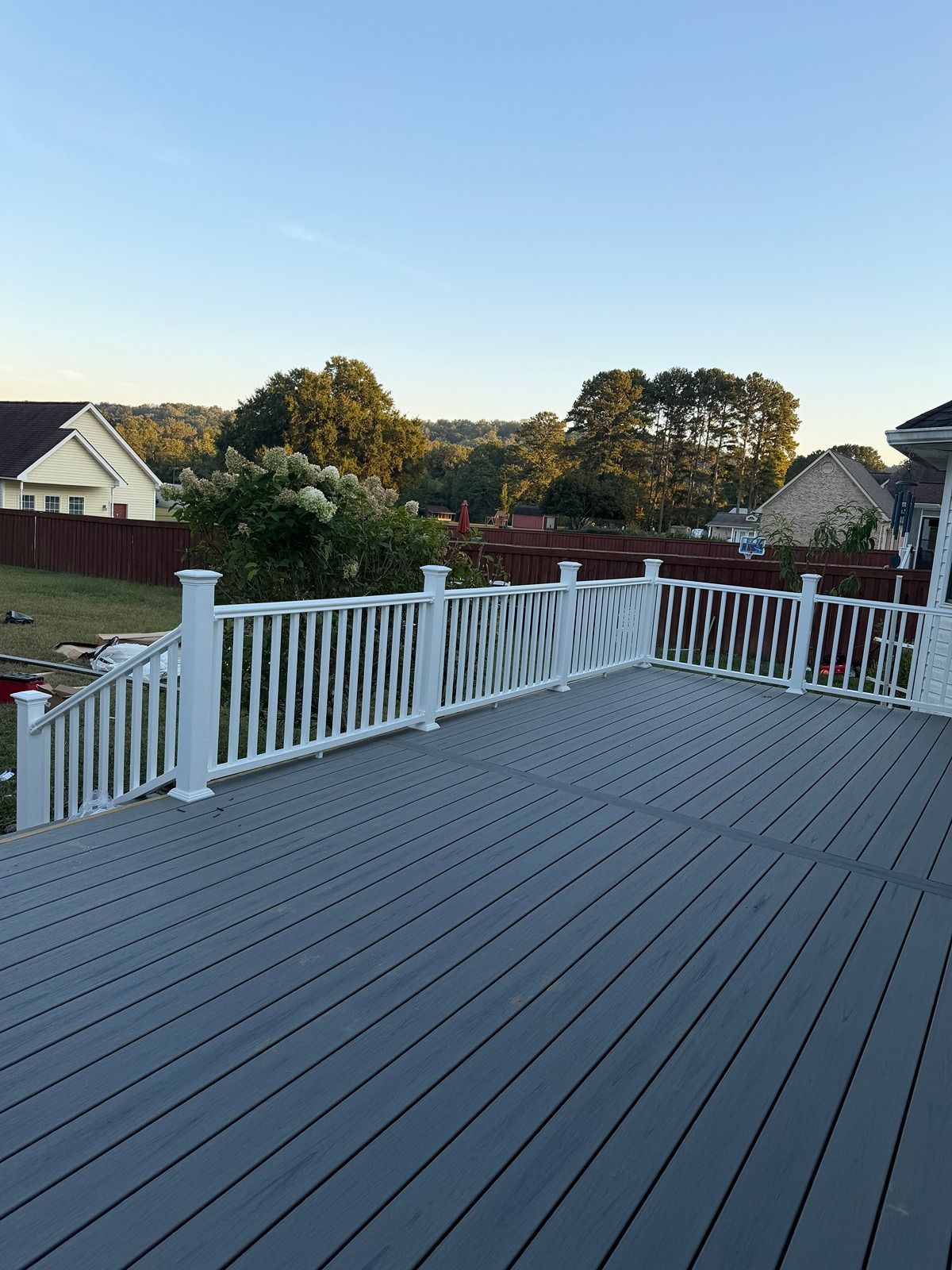
Decking Material Built Around Lower Maintenance
Composite Decks in Ooltewah for homeowners replacing high-maintenance wood surfaces or building new decks in moisture-heavy conditions
The maintenance cycle that comes with wood decking—cleaning, staining, watching for rot, replacing boards—drives many homeowners toward composite decking as their next material choice. Composite decking is manufactured from a combination of wood fiber and plastic polymers that resists the rot and splintering that develop in natural wood exposed to repeated wetting and drying. Ooltewah Decking Company installs composite deck systems for homeowners in Ooltewah who are looking to reduce how much time and recurring cost goes into keeping their deck surface in usable condition.
The humid summers and variable rainfall patterns across Southeast Tennessee accelerate surface deterioration in untreated or under-maintained wood decking, making the rot resistance of composite materials particularly relevant in this region. Composite boards don't need to be sanded, stained, or sealed on a recurring basis, but they do require occasional cleaning to prevent mold and mildew from establishing on the surface—especially in shaded areas where moisture sits longer between rain events. The distinction matters: composite decking reduces maintenance demands, but it doesn't eliminate them entirely.
Explore composite decking options and request an installation estimate based on your property's specific layout and dimensions.
The Difference Between Composite and Wood Installation
Installing composite decking correctly requires attention to details that differ from wood board installation. Most composite systems use hidden fasteners rather than face screws, which requires consistent joist spacing throughout the framing to ensure each fastener clip lands on solid material. Composite boards also have specific requirements for end-to-end and edge gaps that account for thermal expansion—composite material moves more in response to temperature changes than pressure-treated lumber does, and boards installed too tight will buckle in summer heat if those gaps aren't maintained during installation.
After a composite deck is installed, the visible difference compared to a weathered wood surface is immediate: consistent board color, smooth texture without raised grain or surface checking, and a surface that doesn't require any finishing work before it's ready to use. Ooltewah Decking Company also pays attention to under-deck ventilation during installation, because composite boards installed over framing without adequate airflow can trap moisture against the joists beneath, creating exactly the rot conditions in the wood framing that the composite surface itself is immune to. Protecting the framing is as important as selecting the right decking material.
Composite decking is available in a range of colors and surface textures, and the appearance options have expanded significantly compared to earlier generations of the product. Capped composite products—where the wood fiber core is surrounded by a protective polymer shell—offer better resistance to staining and fading than uncapped versions, which is worth considering for decks with heavy sun exposure or frequent use for outdoor dining where spills are common. The right product choice depends on the deck's orientation, how much shade it receives, and how the space gets used day to day.
What Property Owners Usually Ask About Composite Decking
Homeowners considering composite decking for the first time usually have questions about how the material performs in real conditions, not just what manufacturers claim. These answers reflect what comes up during installation conversations in this region.
How does composite decking hold up in Ooltewah's humid climate?
Composite boards resist the moisture-driven rot and splintering that affect wood decking in this region, but shaded composite surfaces can still develop mold or mildew growth on the surface and should be cleaned periodically with appropriate cleaning solutions to prevent buildup.
What is the difference between capped and uncapped composite boards?
Capped composite products have a protective polymer layer surrounding the core that provides better resistance to surface staining, UV fading, and moisture absorption compared to uncapped products, which leave the wood fiber core partially exposed.
Why does ventilation under the deck matter for composite installations?
Composite decking itself resists rot, but the pressure-treated wood framing beneath it does not—trapping moisture between the composite boards and the joists without adequate airflow creates conditions for framing deterioration that can undermine an otherwise durable deck surface.
How does composite board expansion affect installation spacing?
Composite boards expand measurably in high summer temperatures, so installation gaps between boards and at board ends must account for this movement—gaps that are visually correct during cool-weather installation may be necessary to prevent buckling during peak heat months.
What maintenance does a composite deck actually require?
Composite decking doesn't need staining or sealing, but periodic cleaning with a composite-safe cleaner removes surface mold, tannin stains from leaves, and food or beverage residue before they become harder to lift from the board surface.
Ooltewah Decking Company reviews material options, framing requirements, and ventilation considerations before composite deck projects begin, so that the installation performs as the material is designed to. Speak with the team about your deck layout and which composite product makes the most sense for your property's conditions.