
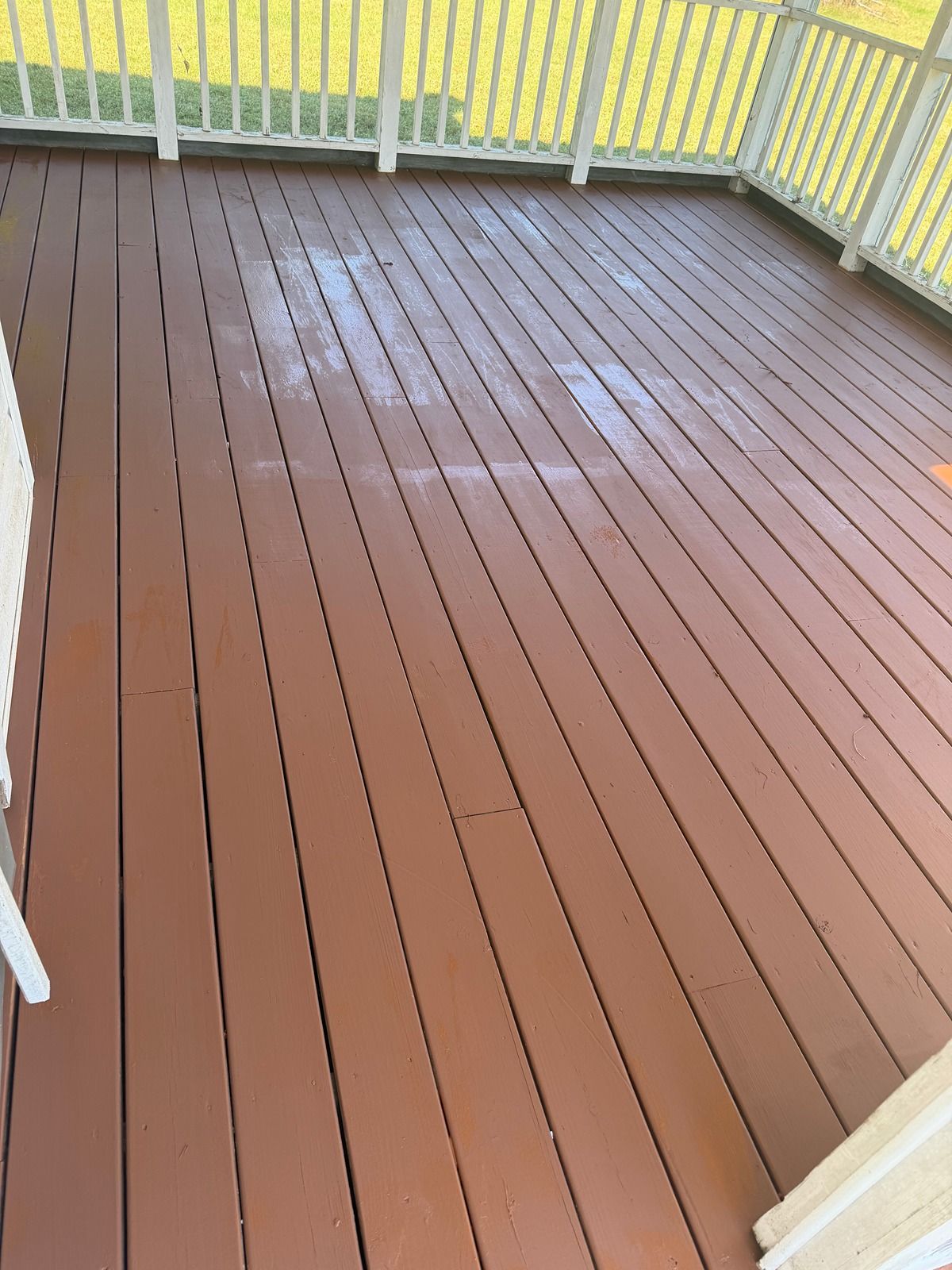
Wood Surfaces Prepared for Weather Exposure
Deck Staining in Ooltewah for exposed wood surfaces showing graying, moisture absorption, or sun-related color loss
Unprotected wood on an outdoor deck absorbs moisture, then dries out, then absorbs again—a cycle that causes the fibers to swell and contract repeatedly until the surface begins to check, gray, and eventually crack. Ooltewah Decking Company applies deck stain to residential wood surfaces in Ooltewah to slow that process by reducing how much moisture the wood takes on during each rain event. In the Chattanooga area, where humid summers combine with frequent rainfall and UV exposure from long sun hours, uncoated pressure-treated or natural wood decking surfaces typically show visible weathering within the first two to three seasons after construction.
The staining process involves more preparation work than application work. Surface cleaning removes accumulated mildew, oxidation, and debris that would prevent the stain from bonding properly to the wood. Depending on the current condition of the surface, preparation may also include brightening the wood to open the grain before stain is applied. Stain selection depends on the wood species, the degree of existing weathering, and whether the homeowner wants a transparent finish that shows grain or a solid-body stain that masks color variation in older or patchy boards.
Request a staining estimate to review the current condition of your deck surface and discuss what preparation and product selection would involve.
Why Stain Selection and Timing Both Matter
Stain penetrates into wood rather than sitting on top of it the way paint does, which means the condition of the wood surface at the time of application directly determines how well the stain performs. Wood that is too wet—whether from recent rainfall or high ambient humidity—won't accept penetrating stain at adequate depth, leaving the finish vulnerable to peeling or uneven absorption within the first season. Scheduling staining during a dry stretch when the wood has had time to release surface moisture is not a convenience preference; it's a technical requirement for the product to function as intended.
After staining is complete, the most observable change is color uniformity—boards that had grayed unevenly or developed blotchy toning from mildew staining will show a consistent tone across the surface. Beyond appearance, the wood will shed water more visibly in the short term, with rainfall beading rather than absorbing immediately into the surface. Ooltewah Decking Company evaluates the wood's current moisture content and weathering stage before recommending a stain type, because applying a semi-transparent product to wood that has already lost significant color depth produces a different visual result than applying it to recently installed boards.
Maintenance intervals for stained decks vary based on the product used, the amount of direct sun the surface receives, and how much foot traffic the deck handles daily. Decks with southern exposure in this region tend to need reapplication sooner than shaded surfaces because UV degradation works continuously even when the wood is otherwise dry. Understanding what affected the previous finish—whether sun, traffic, or moisture—helps determine whether the same product and preparation approach should be repeated or adjusted.
Questions Before Starting Your Staining Project
Deck staining projects raise practical questions about preparation, product choice, and timing that are worth addressing before work begins. These are the ones that come up consistently in Ooltewah and the surrounding area.
How is the deck surface prepared before stain is applied?
Preparation typically includes pressure washing to remove mildew, dirt, and oxidized wood fibers, followed by a drying period and in some cases a wood brightener application to restore surface pH and open the grain for better stain absorption.
What is the difference between transparent and solid-body stains?
Transparent stains allow the wood grain to show through and are better suited to wood in good condition, while solid-body stains provide heavier pigment coverage that conceals color irregularities in older or heavily weathered boards.
Why does humidity affect when staining should be scheduled?
Wood moisture content above approximately 15 to 19 percent—common after extended rainfall or in high-humidity periods during Ooltewah summers—prevents penetrating stains from reaching adequate depth in the wood fibers, which shortens the finish life significantly.
How often does a stained deck need to be recoated?
Reapplication intervals depend on product type, sun exposure, and traffic, but decks with full southern exposure typically show earlier finish degradation than shaded decks receiving similar foot traffic, often requiring attention sooner than the product's general guidance suggests.
What happens if old stain is not fully removed before recoating?
Applying new stain over a failing old finish traps the degraded material beneath the new coat, which prevents proper adhesion and usually results in peeling or uneven finish appearance within one to two seasons.
Ooltewah Decking Company reviews surface condition, current weathering stage, and appropriate product options before any staining work begins. Contact the team to set up a surface evaluation and discuss what a complete staining project would cover for your deck.